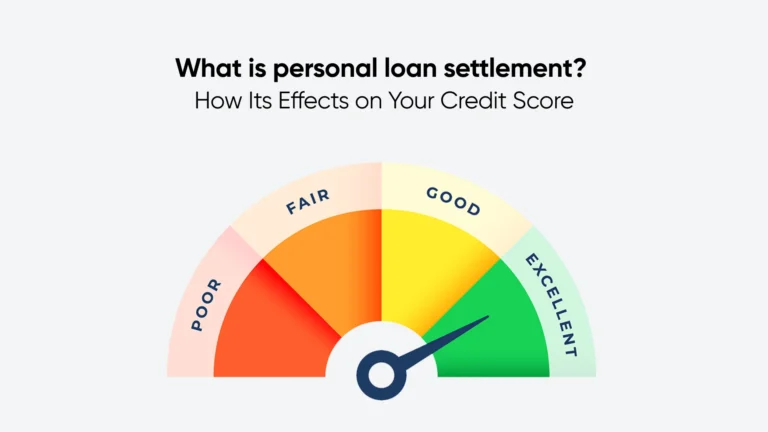
A personal loan is a vital financial tool, but unforeseen financial difficulties—such as job loss, medical emergencies, or a business setback—can make repayment a significant burden. When a borrower is unable to meet their repayment obligations to the full extent, they may need to seek a formal arrangement with the lender to close the loan account. This negotiated process is known as Personal Loan Settlement, or often a One-Time Settlement (OTS).
This in-depth guide, prepared by a financial expert, is designed to clarify the concept of loan settlement, detail its step-by-step process, outline its critical long-term consequences, and explore viable alternatives to help you navigate financial distress responsibly.
Table of Contents
ToggleWhat is Personal Loan Settlement?
A personal loan settlement is a formal agreement between the borrower and the lender (a bank or a regulated NBFC) to close a loan account by paying a lump sum amount that is less than the total outstanding balance owed.
This process typically occurs when a borrower has defaulted on their loan and the account is nearing or has already been classified as a Non-Performing Asset (NPA). The lender agrees to accept a reduced amount to minimize their loss and conclude the debt recovery effort, while the borrower gains immediate relief from the debt burden. The difference between the original outstanding amount and the settled amount is the debt that is ‘written off’ or ‘forgiven’ by the lender.
Settlement vs. Foreclosure vs. Default
Understanding the distinction between these three terms is crucial for assessing your financial standing:
Term | Definition | Impact on Credit Score |
Loan Settlement | Paying a pre-agreed, reduced lump sum amount to close the loan account. | Severely Negative. The status is marked as ‘Settled’ on the credit report, which shows incomplete repayment and is treated as a high-risk event by credit bureaus (Source: CIBIL). |
Loan Foreclosure | Repaying the entire outstanding loan principal and interest before the scheduled tenure ends. | Positive. The status is marked as ‘Closed’ and significantly improves creditworthiness. Penalties may apply as per the loan agreement and prevailing NBFC norms. |
Loan Default | Failing to make the scheduled loan repayments (EMIs) for a prolonged period, typically $\mathbf{90}$ days or more, leading to the account being classified as an NPA. | Catastrophically Negative. Leads to a drastic and immediate drop in CIBIL score and initiates recovery procedures as per the Securitisation and Reconstruction of Financial Assets and Enforcement of Security Interest (SARFAESI) Act, 2002, or other civil remedies (Source: RBI). |
The Step-by-Step Personal Loan Settlement Process
The personal loan settlement process requires careful planning, documentation, and formal communication. It is essential to conduct all communication in writing or recorded channels to maintain a legal paper trail.
Phase 1: Initial Assessment and Communication
- Self-Assessment: Determine your genuine financial capacity—the maximum lump sum you can realistically afford to pay right now.
- Contact the Lender: Inform the lender (bank or NBFC) about your financial distress and inability to repay the full amount. This communication often starts after the account has been overdue for 90 days to align with the NPA classification timelines as mandated by RBI guidelines (Source: RBI).
- Formal Proposal: Submit a written application or formal letter to the lender, proposing a specific settlement of loan amount. Your letter should clearly explain the reasons for your financial hardship and propose a reasonable loan settlement percentage of the total outstanding loan amount.
Phase 2: Negotiation and Final Offer
- Negotiation: The lender will likely review your proposal and counter-offer a higher amount. Settlements for personal loans often range between 50\% to 75\% of the outstanding principal amount, depending on the age of the default and the lender’s current policy on provisioning and recovery.
- Obtain a Written Agreement: Once a mutually acceptable figure is agreed upon, do not make any payment until you receive a formal, written “Loan Settlement Letter” or “One-Time Settlement (OTS) Offer Letter” from the lender. This letter is mandatory and must clearly state:
- The total settled amount.
- The agreed-upon payment deadline.
- A declaration that the loan will be considered fully closed and that all future claims will be waived upon receipt of the settled amount.
Phase 3: Payment and Crucial Documentation
- Make the Settlement Payment: Make the payment as a single lump sum on or before the agreed-upon date, as stipulated in the settlement letter. Retain all payment receipts, bank statements, or proof of transfer.
- Collect the No Objection Certificate (NOC): After the payment clears, the most critical step is to obtain a No Objection Certificate (NOC) from the lender. The NOC is the legal proof that the loan account is now closed, and the lender has no further claim against you.
- Credit Report Verification: Within 30 days (as per credit bureau guidelines), you must monitor your credit report (CIBIL, Experian, etc.) to ensure the lender has accurately reported the loan status as ‘Settled’. Any discrepancy, such as the account still showing as ‘Default’ or ‘Active’, must be immediately disputed with the credit bureau and the lender.
The Critical Impact of Loan Settlement on Your Financial Future
While a personal loan settlement provides immediate debt relief, it triggers severe and long-lasting consequences across various facets of your financial life.
Severe Effect on CIBIL/Credit Score (The ‘Settled’ Status)
A loan settlement is considered an instance of incomplete repayment. The account status is marked as ‘Settled’ or ‘Compromise’ on your credit report, which signals a high credit risk to future lenders.
- Credit Score Drop: A settlement of loan can cause an immediate and significant drop of 100 to 200 points or more in your CIBIL score, depending on your prior credit history.
- Duration: The ‘Settled’ status remains visible on your credit history for up to 7 years from the date of settlement (Source: CIBIL/Credit Bureau Policy). During this period, your capacity to secure new credit will be severely hampered.
Long-Term Borrowing Challenges
Even after your CIBIL score begins to recover, the ‘Settled’ mark presents significant hurdles for future borrowing:
- Stricter Criteria: Most traditional banks and financial institutions will reject new loan applications, particularly for unsecured loans (personal loans, credit cards).
- Higher Costs: If approved, you will likely be offered loans at substantially higher interest rates and with stricter terms, reflecting the increased credit risk.
- Reduced Limits: Credit card and loan limits will often be lower due to the perceived risk of default.
Tax Implications of Debt Forgiveness in India
The amount of loan waived or forgiven by the lender is subject to income tax in India.
- Income from Other Sources: For a non-business personal loan, the waived amount is generally treated as an income in the hands of the borrower under the head ‘Income from Other Sources’ as per the Income Tax Act, 1961 (Source: Income Tax Department).
- Consult a CA: It is mandatory to consult a qualified Chartered Accountant (CA) or tax advisor to accurately calculate and report this ‘debt forgiveness’ income to avoid penalties from the Income Tax Department.
Legal and Regulatory Consequences
While defaulting on a personal loan is primarily a civil offence, the settlement of loan process is a direct result of prior default and may involve legal procedures.
- Negotiable Instruments Act, 1881: If the default involved the bouncing of post-dated cheques (PDCs) or electronic clearing service (ECS) mandates, the lender retains the right to initiate criminal proceedings against the borrower under Section 138 of the Negotiable Instruments Act. The settlement does not automatically nullify the grounds for this criminal case unless explicitly agreed upon in the settlement letter.
- Civil Recovery: The lender can file a civil suit for recovery, although a successful loan settlement usually ends these civil recovery efforts.
RBI Guidelines Governing Loan Settlement and Recovery
The Reserve Bank of India (RBI) enforces strict guidelines to ensure fair and ethical practices during the loan recovery and settlement processes, primarily to protect borrowers’ rights (Source: RBI Circulars on Fair Practices Code).
- Fair Practice Code: Banks and NBFCs must follow the Fair Practice Code, which mandates transparency and ethical behavior in all interactions with the borrower.
- Regulation of Recovery Agents: The RBI has established strict rules for loan recovery agents:
- Agents must be properly trained and follow ethical practices.
- The use of abusive language, physical force, or public humiliation is strictly prohibited.
- Agents are only permitted to call between 8:00 AM and 7:00 PM. (Updated RBI Timings)
- The borrower has the right to file a complaint with the bank/NBFC’s Grievance Redressal Officer or the RBI Integrated Ombudsman Scheme if they face harassment.
- Settlement Policy: Lenders are required to have a Board-approved policy on loan write-off and settlement, which ensures a transparent and non-discriminatory approach (Source: RBI Guidelines on Asset Classification).
Smart Alternatives to Personal Loan Settlement (Before You Settle)
Due to the extreme negative impact of loan settlement on credit history, it should always be considered a last resort. Explore the following alternatives first:
Loan Restructuring or Rescheduling
This involves communicating with your lender to modify the original loan terms without impacting your credit score (provided you adhere to the new terms).
- Extended Tenure: Requesting a longer repayment period will reduce your monthly EMI, making it more affordable.
- Moratorium/Payment Holiday: In cases of temporary distress, the lender may offer a temporary halt on payments, providing you with breathing space (subject to lender policy and RBI guidelines on restructuring).
Debt Consolidation (Transferring Debt)
If you have multiple high-interest debts, consolidating them into a single, lower-interest loan can reduce your overall monthly payment and streamline repayment.
- Loan Transfer: Transferring your existing personal loan balance to a new lender offering a lower interest rate can provide significant relief.
- Secured Loan/Loan against Property (LAP): Using a secured loan (like LAP) to clear an unsecured personal loan can reduce the interest rate dramatically, but it involves risking collateral.
How to Rebuild Your Credit Score Post-Settlement
Rebuilding credit after a loan settlement is a journey that requires time and discipline, but it is achievable.
- Prioritise Credit Card Payments: Use a secured credit card or a low-limit card and pay the full bill on time every month. A history of timely, new payments is the most effective way to improve your score.
- Maintain Low Credit Utilisation: Keep your credit card usage below 30% of your total limit.
- Avoid New Unsecured Debt: Refrain from applying for new personal loans or unsecured credit for at least 24 months post-settlement.
Monitor Your Report: Regularly check your credit report for any inaccuracies, such as the settled account still showing a pending balance, and dispute them immediately.
Also Read: How to Get 800+ Credit Score? 5 Easy Steps
Conclusion
Building a good credit score after loan settlement requires responsible financial choices. You need to put consistent efforts into building a good credit history. Ensure that you make timely credit payments and clear all existing debt. Try to repay the “settled” loan in full and change the status to “closed” by getting a No Objection Certificate (NOC) from the lender. This will ensure you get loan or credit approval in the future without any issues.
YMYL & RBI Compliance Mandatory Disclaimer
This page is provided for informational purposes regarding unsecured personal loans, specifically the personal loan settlement process.
- Zype is a digital lending platform partnered with regulated Non-Banking Financial Company (NBFC). All loans are processed and sanctioned by the partner NBFC in strict compliance with the Reserve Bank of India (RBI) Fair Practices Code and Digital Lending Guidelines.
- Borrower Disclosures: The final terms, including the Annual Percentage Rate (APR), total loan cost, and detailed fees, will be explicitly and transparently disclosed to you in the Key Fact Statement (KFS) before the loan sanction, as mandated by the RBI Digital Lending Guidelines.
- Responsible Borrowing: Personal loans are subject to credit risk. Failure to repay installments may negatively affect your credit bureau score (CIBIL score). You must always borrow only what you can comfortably afford to repay.
Frequently Asked Questions
What Is Personal Loan Settlement?
Personal loan settlement is the agreement between a lender and borrower to repay the outstanding loan amount.
Can I Improve My Credit Score After Loan Settlement?
Yes, you can improve your credit score after loan settlement; however, it may take few weeks to months to build a good credit score. You can do this by clearing any existing debts, low credit utilization ratio and a good repayment history.
What Are The Alternatives To Loan Settlement?
Before loan settlement, you can explore other alternatives like debt consolidation or negotiate with the lender for a lower interest rate. This will have a lesser impact on your credit score as well.
What Is The Most Important Document To Get After Settlement?
The most important document to secure after successfully completing a loan settlement payment is the No Objection Certificate (NOC). This legal certificate, issued by the lender, officially confirms that the loan account is closed, all dues against the settled amount have been cleared, and the lender has no further claims on the outstanding debt. The NOC is essential proof for updating your credit report and protecting you from any future disputes.
Can I Remove A Settlement From Cibil Credit Report?
Yes, you can remove settlement from CIBIL credit report by paying the outstanding amount and getting a No Objection Certificate (NOC) from the lender to remove the “settled” status from your credit report.
Does Your Cibil Credit Score Increase After Closing A Loan?
It depends on how the loan was closed. If the borrower repaid the outstanding amount, then it has a positive impact on the CIBIL score, however, if the loan was settled or written off, then it has a negative impact on the CIBIL score.
How Long Does A Loan Settlement Stay In Cibil Credit Report?
A loan marked as ‘Settled’ will have an adverse impact of loan settlement on your credit score and remain visible on your credit report for up to 7 years from the date of final settlement. During this entire period, the status will indicate to all prospective lenders that the debt was not repaid in full, making it challenging to secure favorable loan terms.
What Is The Ideal Loan Settlement Percentage?
There is no fixed “ideal” loan settlement percentage, as it depends on the borrower’s financial profile, the type of lender, and the age of the default. However, most successful personal loan settlements typically involve the borrower paying between 50% and 75% of the principal outstanding amount. Lenders will always aim to recover the highest possible amount. A strong negotiation must be backed by concrete proof of financial hardship and a realistic, lump-sum payment offer.
Is Loan Settlement A Criminal Offense?
No, loan settlement itself is not a criminal offense. Defaulting on a loan is legally considered a civil dispute (breach of contract). The criminal aspect only arises if the borrower is found to have committed a financial crime such as fraud, or if they default on an instrument like a cheque (bounced cheque under Section 138 of the Negotiable Instruments Act). The act of settling a loan is a commercial resolution to a civil matter.
Can A Bank Or NBFC Force Me To Settle My Loan?
No, a bank or NBFC cannot legally force you into a personal loan settlement. Settlement is a voluntary negotiation between the lender and the borrower, used as a last resort to resolve a defaulted loan. The lender’s primary legal recourse is to pursue civil debt recovery proceedings, not to mandate a settlement. Any pressure tactics to force a settlement are against RBI’s Fair Practice Code and can be reported to the RBI Integrated Ombudsman Scheme.